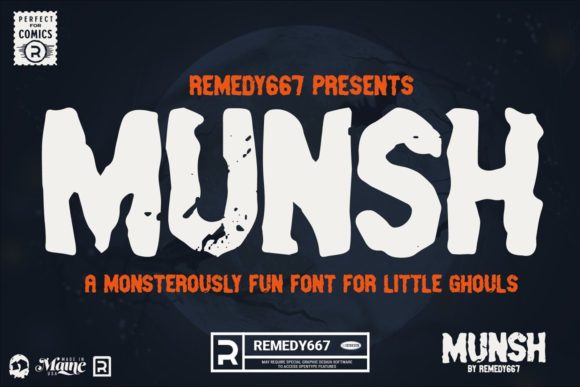
Munsh: A Bold and Chunky Lettered Display Font for Standout Design
In a world where visual design plays a crucial role in capturing attention, the right font can make all the difference. Munsh is a bold and chunky lettered display font that stands out with its strong character and eye-catching presence. Whether you're designing for print, digital media, or branding, Munsh offers a unique aesthetic that can elevate your creative projects.
What Is Munsh?
Munsh is a display font designed to command attention with its thick, geometric strokes and high contrast. It's not meant for long-form text but rather for headlines, logos, and other elements where impact is key. The font’s chunky structure gives it a modern, edgy feel that works well across various mediums.
The name “Munsh” is derived from the term “munch,” which reflects the font’s bold, chewy appearance. This playful yet powerful name aligns perfectly with the font’s personality, making it memorable and versatile.
When to Use Munsh
Understanding when to use Munsh is essential to leveraging its strengths effectively. Here are some common situations where this font shines:
- Branding and Logo Design: Munsh is ideal for creating striking logos and brand identities. Its boldness helps convey confidence and strength.
- Digital Marketing: In online advertising, social media posts, and web banners, Munsh can draw users’ eyes quickly and create a lasting impression.
- Print Media: For flyers, posters, and brochures, Munsh adds a dynamic element that makes your content stand out in a crowded space.
- Artistic Projects: Artists and designers often use Munsh to add a distinctive flair to their work, whether it's for typography art or mixed media pieces.
Challenges and Goals
While Munsh is visually compelling, it also presents certain challenges. Because of its heavy weight and limited legibility at smaller sizes, it’s not suitable for body text. Users must be mindful of how they apply the font to ensure it doesn’t overwhelm the reader or compromise readability.
Another challenge lies in pairing Munsh with complementary fonts. While its bold nature makes it perfect for headlines, it may clash with more delicate typefaces. Finding the right balance between contrast and harmony is key to achieving a cohesive design.
For those aiming to enhance their design skills, using Munsh can help achieve specific goals such as increasing visual impact, reinforcing brand identity, or creating a memorable user experience. However, it requires thoughtful implementation to avoid overuse or misapplication.
Practical Applications and Outcomes
Let’s explore how Munsh can be applied in real-world scenarios:
1. Branding and Logo Design
If you’re building a brand from the ground up, Munsh can serve as the foundation for your logo. Its strong, angular lines give a sense of authority and energy. For example, a fitness brand might use Munsh to communicate strength and determination, while a tech startup could leverage it to project innovation and boldness.
When implementing Munsh in branding, consider how it aligns with your brand values and target audience. Test different variations and color combinations to find the most effective look.
2. Digital Marketing Campaigns
In digital marketing, Munsh can be used in call-to-action buttons, headlines, and promotional graphics. Its boldness ensures that your message is seen and remembered. For instance, an e-commerce site might use Munsh on product pages to highlight special offers or limited-time deals.
To maximize effectiveness, pair Munsh with clean, readable body text. This approach maintains visual hierarchy and ensures that the audience remains engaged throughout the content.
3. Artistic and Creative Projects
For artists and designers, Munsh opens up new creative possibilities. It can be used in typography art, album covers, or even graffiti-style designs. The font’s chunky structure allows for expressive and stylized compositions.
When working with Munsh in artistic contexts, experiment with different layouts, textures, and colors. Don’t be afraid to push boundaries and explore how the font interacts with other design elements.
Recommendations and Considerations
Before incorporating Munsh into your projects, consider the following recommendations:
- Use it strategically: Reserve Munsh for headlines, titles, and key messages rather than large blocks of text.
- Test readability: Ensure that the font is legible in different sizes and backgrounds. Avoid using it in low-contrast environments.
- Pair wisely: Combine Munsh with complementary fonts to maintain visual balance and improve overall design quality.
- Customize if needed: Some platforms allow customization of fonts, so explore options that best suit your project’s needs.
Ultimately, the success of using Munsh depends on how well it aligns with your creative vision and the needs of your audience. With thoughtful application, this bold and chunky display font can become a powerful tool in your design toolkit.