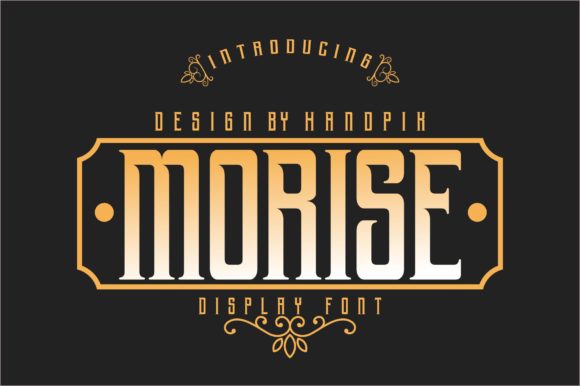
Discover the Magic of Morise: A Unique Display Font for Creative Expression
Morise is more than just a font—it’s a creative tool that can elevate your design projects from ordinary to extraordinary. Whether you're crafting content for Instagram, creating DIY calligraphy, or designing promotional materials, Morise offers a distinctive aesthetic that stands out in a crowded digital space. Its elegant curves and refined structure make it ideal for both personal and professional use, allowing your ideas to shine with clarity and style.
Why Morise Stands Out
What sets Morise apart is its unique combination of elegance and versatility. Unlike many display fonts that feel overly ornate or difficult to read, Morise strikes a perfect balance between visual appeal and readability. This makes it suitable for a wide range of applications, from social media posts to handmade greeting cards. Its clean lines and consistent spacing ensure that your message remains clear while still looking artistic and modern.
For creators who value both form and function, Morise is an excellent choice. It works well with both digital and print media, making it a reliable option for those who want to maintain consistency across different platforms. Whether you're a blogger looking to enhance your website's visual appeal or a small business owner aiming to create eye-catching marketing materials, Morise can help you achieve your goals without sacrificing quality.
Common Mistakes When Using Morise
Despite its strengths, many users make mistakes when selecting and applying Morise. One common error is using it inappropriately for text that requires high readability. While Morise is visually striking, it may not be the best choice for body text or long paragraphs. Instead, it’s better suited for headlines, logos, and short phrases where its decorative qualities can shine without overwhelming the reader.
Another mistake is failing to consider the font’s character set. Morise includes a variety of stylistic alternates and ligatures, but these are not always available in every version or license. If you’re planning to use special characters or symbols, it’s important to verify that they are included in the font file you’ve downloaded. Otherwise, you may end up with unexpected results or formatting issues.
Some users also overlook the importance of proper licensing. Morise is available in different formats and pricing models, and each comes with specific usage rights. For example, some versions are free for personal use only, while others require purchase for commercial projects. Failing to check the license terms can lead to legal complications, especially if you plan to use the font in a product for sale or on a website with a large audience.
How These Mistakes Affect Your Work
Using Morise incorrectly can have several negative effects. Poor readability can confuse your audience and reduce engagement, especially on platforms like Instagram where attention spans are short. Inconsistent character sets can lead to visual errors, which may damage the professionalism of your design. And improper licensing can result in legal disputes or the need to remove your content altogether, which can harm your reputation and credibility.
On the other hand, using Morise correctly can significantly enhance your work. The font’s unique design can make your content more memorable and visually appealing, helping you stand out in a competitive market. Proper licensing ensures that you can use the font confidently, knowing that you’re within your rights and protecting your brand’s integrity.
Practical Tips for Using Morise Effectively
To get the most out of Morise, start by understanding its intended use. Use it for headlines, titles, and short quotes rather than for long blocks of text. This allows you to highlight key messages while maintaining readability. Pair it with a complementary sans-serif or serif font for body text to create a balanced and professional look.
Before downloading or purchasing Morise, check the font’s character set and license agreement. Ensure that it includes all the characters you need and that it grants the right to use it in your intended application. If you’re unsure about the license, opt for a version that clearly states its terms or consult the font provider’s documentation.
When applying Morise to your designs, test it in different contexts to see how it looks in various sizes and colors. Some fonts may appear too bold or too light depending on the background or contrast. Experiment with different color combinations to find the best visual impact without compromising legibility.
Realistic Examples and Better Approaches
Consider a scenario where a small business owner uses Morise for their website’s logo and navigation menu. While the font looks great, the body text is also styled with Morise, leading to poor readability. The solution is to switch the body text to a more readable font, such as Arial or Helvetica, while keeping Morise for the headings and branding elements. This approach maintains the visual identity of the brand while ensuring that the content is easy to read.
Another example involves a blogger who wants to use Morise for their social media posts. They download the font and apply it to all text, including captions and descriptions. However, the text becomes difficult to read on mobile devices. The better approach is to use Morise only for the main headline or tagline, and reserve the rest of the text for a simpler, more legible font. This ensures that the content remains accessible while still incorporating the unique style of Morise.
What to Check Before Using Morise
Before making a decision to use Morise, there are several factors to consider. First, evaluate the purpose of your project. Is it for branding, marketing, or personal use? The font’s suitability will depend on the context in which it’s applied. Next, review the license agreement to ensure that it aligns with your intended use. Finally, test the font in different environments to confirm that it performs well across various platforms and devices.
Additionally, consider the availability of the font. Some versions may be limited to certain platforms or require additional software to install. If you’re working on a project that requires compatibility with multiple systems, choose a version that supports cross-platform use. Lastly, assess the cost associated with the font. While some versions are free, others may require payment, so factor this into your budget and decision-making process.
By carefully evaluating these aspects, you can ensure that Morise is used effectively and responsibly, maximizing its potential while avoiding common pitfalls. With the right approach, Morise can become a powerful tool in your creative arsenal, helping you bring your ideas to life with style and precision.